Friday, June 28, 2013

Irrelevant Literary Musings: On "A Vindication of Love"


Unelegy of Romance:


On  

M. Gabrielle

Romance is dead, proclaims Cristina Nehring in her vindication of love. We have killed it, with our online dating sites and ever-available sexual partners, with our open relationships and acknowledgement of affairs, with our philosophy that, with the exception of sacred, heterosexual marriage, commitment is outdated and pointless. The constant tension between chivalry and so-called feminism is ever-present in relationships, when paying for the check after the date, and the moment when she expects him to open the door for her instead of barging ahead. Flowers are often deemed too expensive; why buy your wife flowers on your anniversary and make extra work (finding a vase, keeping the stems trimmed, tolerating increased allergies around the damn roses) when you could simply post a virtual bouquet on her Facebook timeline? Romance is indeed dead.
Nehring helpfully supplies a cure to this most dire of cultural ailments: Tailor your life to follow the Scarlett O’Hara model. Marry and remarry unexciting men for wealth and security, but make sure to pine after an uncatchable and dashing Ashley Wilkes. Run into Rhett Butler every once in a while just so the passion between you is  kept smouldering, ready to rekindle your nearly-defeated spirit at a moment’s notice. Never allow yourself to have security with the man you want, for as Gone With The Wind becomes vague and colourless after Scarlett marries her forbidden Rhett, your life will lose all purpose and excitement if you can count on keeping your man.
Just as it’s happiness that kills a love story--whoever heard of Cinderella after her happy ever after?--it’s distance that revives one. Distance has many benefits in the context of a relationship. You are not constantly exposed to your partner’s flaws when in close quarters all the time, you don’t grow complacent when the only hinderance to your heart’s greatest desire is the few inches of bed between you, and you’ll never feel stifled if you only have hours at a time together.
Whether it be physical distance between you and your globe-wandering lover; financial or status distance; or emotional distance; it will make the heart grow fonder. Examples of this mind-blowingly cliché piece of advice: Tristan and Iseult, who went out of their way to place as many obstacles between them when Iseult’s (probably) gay husband Mark refused to make life difficult. They took huge risks not only in their relationship, with Tristan constantly sneaking into Iseult’s bed under Mark’s nose, but Iseult also sent Tristan on near-impossible, very possibly deadly quests for her. With him far away on errands for her, his fair queen, Iseult, could pine for her lover without being interrupted by mundane day-to-day bickering, reiterating that couples are happier with space between them.
Another part of the egalitarian disease slowly killing romance us has to do with status. In America we’ve embraced the idea that anyone can achieve any position, whether it be supreme ruler of the country (elected by a majority) or CEO of a multi-billion dollar company (just Kickstart your idea). The illicit--but conversely much-traversed--path of empresses and slaves or successful businessmen with starving but brilliant artists as their lover-muses has been almost completely swallowed up by the forest of couples on equal levels, who are working in similar jobs at the same level, both finishing college and looking for work and affordable apartments to share, or even world-famous actors and actresses with their flock of adopted children. With the breaking of barriers of rank and social position we’ve erased yet another path to a potentially glorious love affair, demoting it to the status of a carefully labeled, egalitarian relationship.
Then there is the double standard of commitment, or lack thereof: While marriage is still considered to be an absolute commitment by many, till death do them part, affairs and divorce are commonplace, and have become almost a commodity as public entertainment. This curious paradox is little explored or questioned in modern society, as the ages and definitions of acceptable relationships grow even as other, “healthier” ones (think Scarlett, Rhett and Ashley) are tabooed. First boyfriends are had at 8 instead of 16, virginity is an increasingly controversial commodity, and respect for relationships is scant. The often religious backlash against the growing romantic freedom of especially women and those with same-sex partners, whether they be conducted for one night in a bar or for a lifetime in a picket-fenced home, is gaining increased media attention for its old-fashioned ridiculability.
Although the seemingly obvious solution for such troubled, commitment-hungry and -phobic extremes--so-called open marriages--is still shunned, the idea is by no means new. Amelia Earhart, most famous for disappearing over the Pacific with an alcoholic navigator and without crucial navigation equipment, had a fascinating private romantic life usually referred to as “modern”. “Modern” in the sense of what is essentially an open marriage with specific guidelines for the maintenance of the happiness of Earhart, whom it is difficult to not think of as a depression-prone, commitment-shy bird in her metaphor: “I cannot guarantee to endure at all times the confinement of even an attractive cage.” Nehring’s remedy: Marry someone else, as Earhart’s potential husband had already done, and conduct numerous extramarital affairs with Putnam and other handsome young men.
Instead, Earhart took the opposite approach and married George Putnam, taking down the boundary between them, and therefore erasing the possibility of satisfaction and happiness that could have thrived in a more perilous relationship. Although she’d given in to conventional standard on the marriage front, Earhart had less-common guidelines for her union with Putnam, which she communicated to him in a letter after he proposed to her for the sixth time.
“Dear GPP
There are some things which should be writ before we are married -- things we have talked over before -- most of them.
You must know again my reluctance to marry, my feeling that I shatter thereby chances in work which means most to me. I feel the move just now as foolish as anything I could do.  I know there may be compensations but have no heart to look ahead.
On our life together I want you to understand I shall not hold you to any midaevil [sic] code of faithfulness to me nor shall I consider myself bound to you similarly. If we can be honest I think the difficulties which arise may best be avoided should you or I become interested deeply or in passing) in anyone else.
Please let us not interfere with the others’ work or play, nor let the world see our private joys or disagreements. In this connection I may have to keep some place where I can go to be myself, now and then, for I cannot guarantee to endure at all the times the confinement of even an attractive cage.
I must exact a cruel promise and that is you will let me go in a year if we find no happiness together.
I will try to do my best in every way and give you that part of me you know and seem to want.
A.E.”
Although she and George Putnam were technically married, many would say that Earhart had negated the spirit of the ideal Frida Kahlo, another example of a modern thinker in relationships whose life is more in line with Nehring’s philosophy, did make the mistake of marrying twice. (The severity of this error is dimmed somewhat by the fact that both times it was to the same man, Diego Rivera.) Her turbulent artist’s life was scattered with passionate, tumultuous flings with both men and women, pain due to heartbreak and physical difficulties, and well-justified angst. Frida and Diego met when she was still in high school; she asked him for advice on her art, and he declared that she had talent. A few years later, when she was 22 and he 42, they were married for the first time.
“Needless to say, theirs was an unconventional and problematic, if passionate union...” Frida and Diego’s relationship was supplemented by affairs on both sides, including Frida’s passionate flings and relationships with Josephine Baker, Isamu Noguchi and Leon Trotsky. According to Nehring’s philosophy, the fact that their “union” was unconventional and problematic was not a curious addition the passion between them, but the very reason that their first marriage was not their last. Had they both been 32 with solid resumées, secure jobs as accountants, and no desire to stray from their egalitarian marriage, not only would they have been forgotten as soon as the marriage certificate was filed, but they would have been one of the many couples responsible for the death of romance.
Due to the saturation of our society with technology that demands constant communication, accessibility to nearly any point ot the planet at short notice, and the diminished acknowledgement of social and financial gaps between partners, it’s increasingly hard to find “true” happiness in any conventional relationship. The excitement in crossing boundaries and overcoming obstacles to be with a lover is dimmed, deemed taboo in most parts of society, and grown nearly obsolete. Our advice: Ditch the books on pleasing your husband (or wife) and find yourself a Scarlett O’Hara.

Christina Nehring, author of A Vindication of Love, is unmarried herself, apparently undecided on whether or not to take her own advice or go a more traditional path (which she’s since said she’s not advocating against, just pointing out the numerous reasons why other routes are more beneficial to individuals, collective relationships, and the health of romance on the whole). Nehring, a “consistently provocative” critic and prodigious writer, lives with her daughter Eurydice sometimes in Greece, sometimes Paris, and the rest of the time in the capital of healthy relationships, Los Angeles.

Friday, June 7, 2013

Book Review: Bastard Out of Carolina

Friday Spines Book Review:


Bastard Out of Carolina is a story of family and resilience set in a demographic not often portrayed without bias or agenda. Set in the poor South in the 1950's, it's a novel reminiscent of a memoir with an incredibly honest voice that provides a reliable, unflinchingly harsh narrative.

The book opens with an explanation of the title. Our main character's 15-year-old mother, Anney, was in a car accident when she was pregnant, and she gave birth a few days later, still in a coma. Her mother and sister couldn't convince the hospital staff that Anney was married, so her newborn daughter Ruth Anne's birth certificate had "Illegitimate" stamped across the bottom. Although Anney tried several times to obtain a certificate without the shameful word, Ruth Anne--quickly nicknamed Bone--grew up certified as a bastard. 

Bone's father hadn't been around for a while by the time she was born, and her sister Reese's father is killed in a car crash. A few years later Anney is pregnant with Glen's baby, and after their marriage she miscarries. Glen begins sexually abusing Bone in a car, while they're waiting for news of Anney's baby. This continues sporadically over the years, combined with physical abuse that goes long undiscovered. 

One of the subplots of the book is Bone's friendship with a rich girl named Shannon Pearl, whose parents are involved in managing the gospel choir of the local church. Bone has an intense love affair with gospel music, which is empathized with but gently ridiculed by her many family members. Bone vascilates between intense pity and hatred for Shannon, feels at times part of the Pearl family and at times completely alienated by the differences in their financial and social situations. Bone's reflective tone analyzes her relationships with immediate and extended family as well as dynamics in other families, providing us with a sense of the "typical" in her culture even as it serves as a mirror to tell us more about Bone herself.

There are many themes of family in this book, both good and bad, that set it apart from other popular novels set in the south (To Kill A Mockingbird or Gone With the Wind, for example). The culture is fascinating and very well-written, in a realistic and unpatronizing tone. While the story is certainly dark, Bone's youth and her unquestionably strong personality rescue the novel from having a completely hopeless atmosphere. There are themes of alcoholism, violence, and abuse, so I don't recommend this novel for the squeamish reader, or readers under 16. 

Other things I liked about this book:
  • Allison's incredibly vivid, adept use of imagery isn't limited to either the positive or more disturbing scenes in the book. Her subtle but meticulous detail touches on many facets of Bone's life, yet isn't exhaustive enough to discourage readers.
  • The characters are full and realistic, able to support a story of their own even as they're kept in the background by Bone's analytical perception.
  • The ending isn't cliché but it's lovely and fits well with the story.
  • Bone's narration is intelligent, spirited, and clear, and although we see events literally through her eyes--if she's asleep or absent, the gap in the story is either acknowledged or filled in with someone else's version of the events. The novel reads as something closer to memoir than fiction, excellently blurring genres in a semi-autobiographical story.


This is a very unique book, and the only book I could think of for the Similar Books recommendation is The Red Tent, by Anita DiamentTheir Eyes Were Watching God, by Zora Neale, and The Glass Castle, by Jeanette Walls have both been recommended to me as being similar, although I haven't read them yet--if you have read either of those, let me know your thoughts!

Happy reading!

M. Gabrielle

Thursday, May 30, 2013

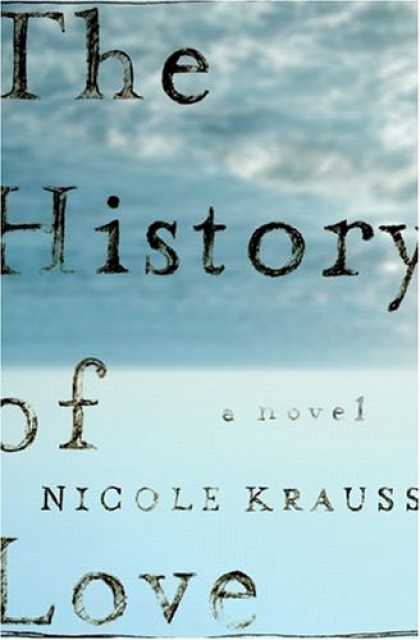
Book Review: The History of Love

Friday Spines Book Review:


The History of Love, by Nicole Krauss

Disclaimer: This book is confusing. I'm reading it for the second time and I'm still confused. I'll try my best do to a simplified plot summary, but I suggest you skip to the criticism portion of this review, as the book is complicated enough without being condensed. 

The History of Love is told mostly from the perspective of both the young and old selves of Leopold Gursky; Alma, a young girl; and her brother Bird. There's some loose third person narration to fill in the gaps in the history that follows Zvi Litvinoff, Leo's former lover Alma Mereminski (a different Alma), a man named Jacob Marcus, and Bruno, Leo's friend; these aren't main characters, but are necessary to the plot. 

The book entwines many stories. As a young Jewish man in Poland, Leo escapes from his home country as Germany's presence begins being felt throughout Europe. Once in America, he finds his childhood lover, Alma (Mereminski), who'd also fled to America. She has since had Leo's child--Isaac Moritz--presumed her lover dead, and married her boss's son. Leo is heartbroken.

Leo is the eventual author of three books, including one entitled The History of Love (History), which he writes for Alma (Mereminski). At one point in the story, when Leo is very sick, his friend Zvi comes to visit him. While Leo is sleeping, Zvi reads several short pieces of Leo's writing that are sitting on his desk. Zvi steals the manuscript of Leo's book History, and we spend a few paragraphs exploring his guilt over this deception. Later, we discover that a small number of copies of History were published under Zvi's name, unbeknownst to Leo. 

Many years after this, Alma (not Mereminski) comes into the story. Both of her parents loved The History of Love, and the young Alma is named after Leo's lover Alma, who was written into History. Through her brother Bird and her mother's actions, Alma discovers her connection to Leo's lover with the same name, and although her namesake has recently died, the book ends with a meeting between the elderly Leo and the young Alma. (End of summary.)


My main criticism of this book is that it's very complicated. The story is beautiful and very well written, but the multitude of incredibly subtle characters and subplots scream for flow charts and family trees, and--unsurprisingly--distract from enjoyment of the language. The characters are distinct and fascinating, the excerpts of Leo's History included in the book are gorgeous, and both the imagery and the structure are excellently executed. I wouldn't classify the content as inappropriate, but wouldn't recommend the book to most readers under 17, due to the complexity of the story. It requires a great deal of concentration to read, but the exquisite beauty of the story will redeem this book for dedicated readers.


Other things I liked about this book:
  • The slightly dark tone is interrupted with entertaining passages by the younger, strong-voiced Alma. She describes her brother's transformation into an extremely religious young boy, tries to find someone for her mother to remarry, and explores the impact Leo's book History has had on her life.
  • Although its ambiguity frustrates me sometimes, all aspects of the ending are incredibly lovely and fit impeccably with the tone of the rest of the story
  • The jumps between the beginning and the end of Leo's life are fairly well juxtaposed, and it is fascinating to see the character evolve through relationships and travels.
  • Leo's friendship with Bruno, which we see in Poland, during their childhood, and after they're reunited later in life, captures the imagination. It's never revealed whether or not the older Bruno is a real person, but his fascination with Irish audiobook narrators and the motivational techniques that he uses on Leo are very amusing.


If you have any thoughts on the interpretation of The History of Love, or any other literary comments, let me know!

Happy reading--
M. Gabrielle

Friday, April 5, 2013

The Hours


Friday Spines Book Review:


Michael Cunningham’s The Hours is one of my favorite kinds of books: Not only is it composed almost entirely of literary references, the first main character is an authoress, the second is a main character in her book, and the third is a reader of that very book. The authoress is Virginia Woolf, and her Mrs. Dalloway is being read by unhappy 1950’s housewife Laura Brown.


We see Ms. Woolf over a few weeks as she’s making friends with Mrs. Dalloway, entertaining her sister, and having passive-aggressive power issues with her household servant. We meet her steadfast editor husband, Leonard, who tries to help balance the intense terror and pain of his wife’s frequent headaches. Mrs. Dalloway, as some may know, is being reunited with young friends grown old, and dealing with age and death in many different aspects. She is planning a party to honor her friend and ex-lover Richard, who’s receiving an award for his book. (He’s famous for his poetry, and no one has read his book, but since he’s an incredible poet they assume his book must be just as good.) Mrs. Brown is frosting a cake for her husband’s birthday and struggling with the unsatisfying busywork and details of suburban life, centered around family and excluding her own wants completely. She leaves her young son with a neighbor, drives into the city, and rents a hotel room for the day. She spends the afternoon reading Mrs. Dalloway. We see these three characters' lives to near completion, as they encounter catalysts for dramatic changes in their lives and themselves, and the ripples these changes cause in their families and communities.


I’d recommend this book for ages 15 (or more mature early teens) and up; The Hours is definitely not a children’s book, although it reads like one. Cunningham’s light, fluid narrative often contrasts with the darker aspects of the story (of which there are many). The three narratives are distinct and full of personality, and the stories are just separate enough to intertwine continually throughout the story. I suspect I’d get more out of the book if I’d read Mrs. Dalloway, although I’ve heard it can be hard to get through. If anyone has read both books, I’d love to hear your thoughts!


Other things I loved about this book:

  • Hearing about Virginia Woolf’s life and writing process from a first-person perspective was fascinating and quite enjoyable. It’s lovely to read about other writers, especially if they happen to be famous, and especially from such an intimately written narration.
  • Admittedly, I read this book in an afternoon, so it may be that I would have noticed this more had I taken my time with the story. Apart from the obvious connections, as Mrs. Brown reads about Mrs. Dalloway and Ms. Woolf creates her, the overlapping stories and foreshadowings took me completely by surprise. (Always a wonderful feeling.)
  • The ending was perfect--charmingly written and well-fitted with the rest of the book, just enough of a shock to be enjoyable while still being realistic.
  • Although there were darker, not-meant-to-be-subtle aspects to The Hours, the characters' personalities--especially Ms. Woolf’s wry humor--were a well-balanced antidote to those moments.


I just got a book I believe is titled Romancing Virginia Woolf (I don’t have it with me or I’d link to the book) on which I’m hoping to do a short review, tying into this one. If anyone here has read it, let me know! I’m looking forward to the book.

Happy reading!
M. Gabrielle

Friday, March 22, 2013

Le Petit Prince


Friday Spines Book Review:


(Original French text)

 
Firstly let me acknowledge that this is, undeniably, a children's picture book. I'm not sure whether I ever defined an age range for the books here; if there were, it would now be 3-100+. Although marketed towards the very young reader, this book includes fascinating reflections on the meaning of time and growing older, and is worth reading at any age.

The story opens with our artistically challenged narrator, a pilot, stranded on a small island with only his recently crashed airplane for company. He calculates he has enough food and water for about eight days, and after beginning reparations of dubious usefulness, goes to sleep. He’s awakened by a diminutive prince, asking him to draw some sheep. We don't understand why sheep and not, for instance, an elephant inside a boa constrictor; all the tprince will tell our narrator is that he needs a sheep. Our pilot obligingly draws the sheep, and after a few tries, the right kind of sheep--not too old, or too hungry, or too young--is procured.
A curious mix of random and philosophical, juvenile only in its light writing style and young main character, Le Petit Prince conveys both a sense of passing time and motionlessness, exploring different aspects of time as they relate to humanity. Told in a childish manner that is easy to perceive as non-sequitur, the narration is refreshing and by turns bittersweet and comforting. It's a good book to read alone, ponder for a while, and then make your friends read--discussion of the story is basically inevitable.


Other things I like about this book:
  • The illustrations are beautiful, and the background we get on our narrator-pilot's artistic history is charming.
  • Although there are definitely messages to take from the prince's story, the author doesn't try to slip them in or be sneaky in his advice to children. (The advice is rather irrelevant, as you'll read, and quite amusing.)
  • The narrative is primarily told from the pilot's point of view, but the prince's flashbacks are excellently handled. The voice is clearly different, and the transitions are fluent and eloquent.
Author's note: I read this book in French and English; it was an assignment for my French class, and I wanted to do a review instead of an essay. If you know a little French, it's fun to get the book in both languages and read them side-by-side. The author's French is refreshingly different from that of traditional textbooks, and it's fun to see the similarities between the languages.

A second note, also by the author: look forward to reviews of Cloud Atlas, by David Mitchell; 1Q84, by Haruki Murakami; and The Hours, by Michael Cunningham. I'm hoping to do individual reviews as well as a comparison, as they're all told from multiple perspectives.

Happy reading!
M. Gabrielle

Monday, February 11, 2013

How To Breathe Underwater

Friday Spines Book Review:


If you haven't already, please come away from this sentence feeling encouraged to read my Irrelevant Literary Musings on the short story.

Before you start this book:
I recommend that you do not read the stories in order. The opening "Pilgrims" is not bad, but it's more intense than most of the other stories (and somewhat nauseating), and gives an unrealistic representation of the book. I recommend beginning with either "The Isabel Fish" or "Note to Sixth Grade Self"--they're not passive, but will provide an easier transition from life to the intensely captivating world that' is Julie Orringer's writing.

How To Breathe Underwater is a collection of short stories that range in tone from uneasily disturbing to nostalgic and wise. As a whole, the collection of stories could be qualified as a flaunting of Orringer's versatile writing--while Underwater has received criticism that the stories are too similar in subject (adolescent girls being the collection's primary focus) but I'd call it more of a theme. In any case, the expert shifting in narrative tone, voice, and technical style overshadows the parallels between the stories, breaking any trace of monotony.

I'm not going to use the word favorite here, because each of the nine stories has a unique quality to recommend it. The stories I most enjoyed were "The Isabel Fish" and "Note to Sixth Grade Self". In "The Isabel Fish", we build an understanding of Maddy's aversion to water through her science project--breeding fighting fish--and her scuba lessons. Slowly revealed are details of the night her brother's girlfriend drowned. "Note To Sixth Grade Self” is told in the little-used second person as a presumably woman gives universal advice to her unsuspecting Sixth Grade Self. Orringer subtly tells the story through anecdotes such as "do not wear a skirt on the first Thursday of September--it will be windy" and demonstrates an excellent grasp of second person writing through the ease in which the story is told.

Some of the stories--e.g., "Stars of Motown Shining Bright"--have premises that seem totally unrealistic to me. Our narrator Lucy is around sixteen, and is in a semi-subtle competition with her friend Melissa over a boy's attention. Lucy has just slept with said boy (Jack) but is once again overshadowed by Melissa, who traps Lucy into being an accomplice in her plan to elope with Jack and become a model. The two come frighteningly close to accomplishing their goal--they acquire a car and drive to Detroit, with "borrowed" money and a gun that only Lucy knows about. Finally Lucy gets fed up with Jack, who's still flirting with both her and Melissa, and demands that they return home. If this were a novel, I'd probably enjoy the story but be dissatisfied with the unlikeliness after finishing it. However, told in Orringer's matter-of-fact style and kept brief, it's easier (but not completely effortless) to focus on discussion the characters and plot instead of arguing with the book about implausibility.


Other things I liked about this book:
  • The variety of narration, which is so adept I must reiterate it. Simultaneously refreshing and unsettling, the stories are juxtaposed in tone, characters, and setting, but still manage to retain a subtly sense of unity.
  • The titles are beautiful, and provide another thought-provoking piece of the succinct short stories to analyze.
  • This isn't a note on any specific story, but I appreciated Orringer's variety of perspective on children and young people's experiences. She ranges from clever retellings of middle school angst to parents with cancer to the death of friends. It's wonderful to see a collection of such accuracy and variety among the barrage of badly-written vampire romances, and allows me, as a teenager, to see my persona able to reclaim a sense of dignity in the literary sphere. 

Although I've never made it through a book of short stories (that I remember), I'm also reading a book of Colette short stories that's absolutely excellent. (Here's the Amazon link. If you can get the forward by Erica Jong I recommend it!)


Happy reading!
M. Gabrielle

Thursday, January 31, 2013

Irrelevant Literary Musings

In which I prove that the only worthwhile short stories are badly written


Let me emphasize my aversion to short stories: There are three possible outcomes of reading a short story. If the story is good--if it uses narrative to convey feeling, story, and tension; manages to foreshadow impending doom with a single innocuous sentence; if it skips the climax and ends with a quiet dénouement or "concludes" directly after all the characters have suddenly dropped dead--you will not be able to rest. Your stomach will continue along the trajectory of the main character's path from cliff to rocky ocean, and the story's abrupt cease will only deepen the nausea felt as you wait for the character to black out just before impact. Even if the character has time to recover from the emotional simultaneous loss of their mother, sister, and husband before the story ends, you do not recover: For your character two years may have elapsed, but a single page is not enough time for a reader to grieve. 

If the story is mediocre, it will have a minimal impact on your life--you won't remember it well enough to be reminded of your main character even when you bake her favorite cookies. It will be as if the story never existed.

If the story is bad, however, you're left with a slight dissatisfied feeling in your stomach: no emotional damage will have been caused; you won't have inherited the main character's devastating (but ineptly written) fear of shoes; and moreover, you'll have the satisfaction of knowing you only wasted twenty minutes reading this flop of a story. This far outweighs any possible effect even the best short story could have--for no short stories end happily. Those are known as children's books. 

Thus ends my discourse on the evils of the "good" short story: Please await my review of How To Breathe Underwater, by Julie Orringer (a collection of her short stories) with bated breath.

Happy reading!
M. Gabrielle