Showing posts with label 15 and up. Show all posts

Friday, July 5, 2013

Sylvia Plath: The Bell Jar and Wintering


Friday Spines Double Book Review: 


Wintering, by Kate Moses
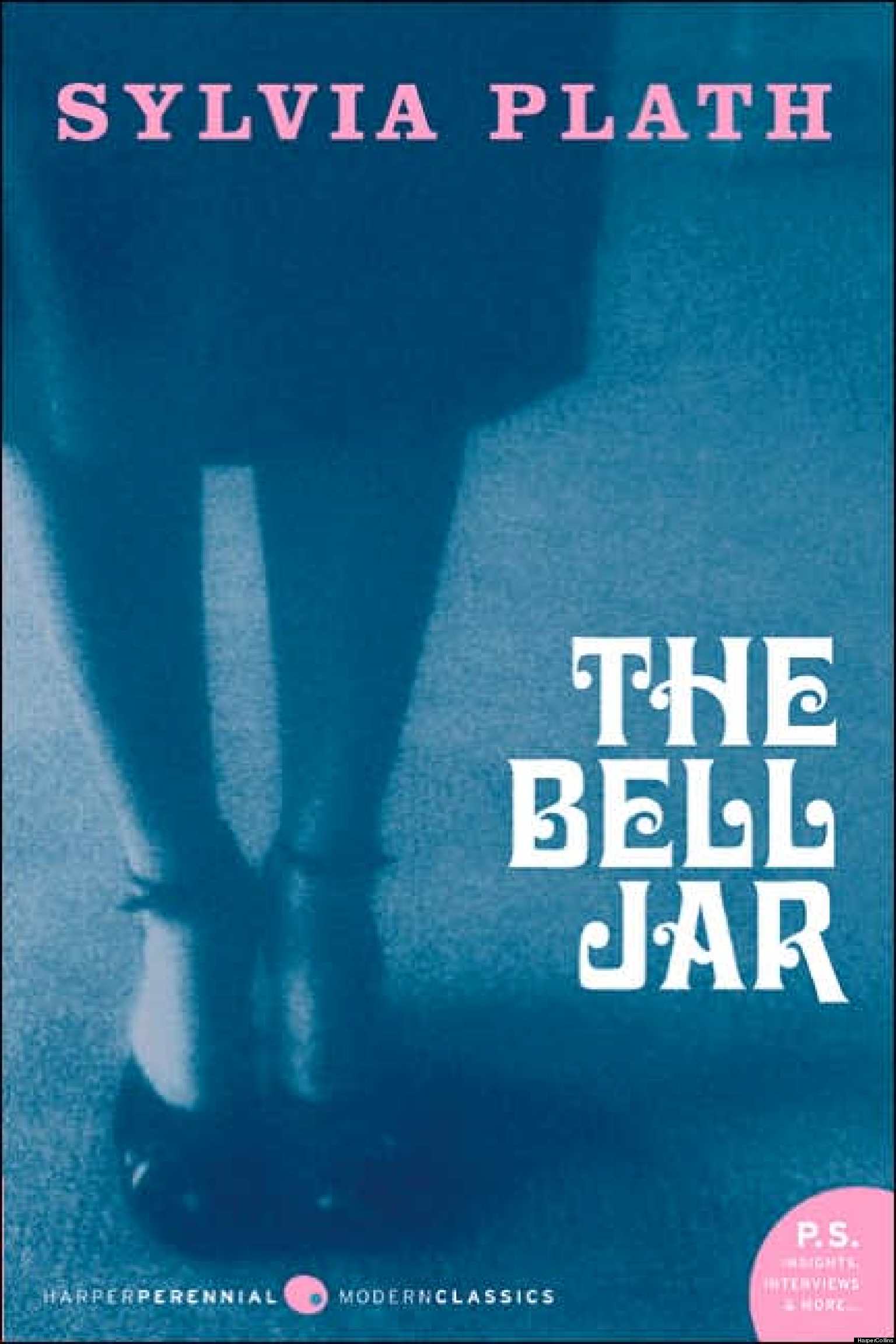
The Bell Jar, by Sylvia Plath


Among Sylvia Plath's poetry, short and long stories, and children's books, her novel The Bell Jar is the best known. It reads as a semi-autobiographical narrative, entwining aspects of Plath's experiences with bits of fantasy. Kate Moses' Wintering, marketed as a "novel of Sylvia Plath", compliments The Bell Jar with the literary equivalent of a dramatized biographical documentary. For those new to Plath's writing, I recommend reading Wintering and then venturing on to The Bell Jar if you're so inclined.

Moses' innovative use of the loosely biographical novel avoids the dreaded attention-seeking feel of much writing marketed as "modern" or "new". There are two narratives, both close third person, which follow Plath and her two children (and occasionally her separated husband) through their move from the English countryside back to London, and through Plath's psychological struggles. One of the narratives takes place a few years before the other, and the chapters--spaced a few months apart--can be hard to follow if you don't pay close attention to the dates. 

The novel opens with the chapter heading "Morning Song"; December 12, 1962; 5:30 AM; London. "Morning Song" is the first poem in Plath's collection of poems Ariel, and Moses uses the title of each poem as her chapter titles. 
In Wintering, the author uses the double narrative of past and present to recreate Plath's past and keep it relevant with the tumultuous events in her present, after she separated from her husband and moved to London with her two small children. The present narrative focuses on the creative and maternal aspects of Plath's life as well as her depression, deftly bridging the gap between reader and subject as the story develops. After her suicide, the novel explores her husband Ted Hughes' response to her death as well as his posthumous handling of her writing, providing sensitive commentary that's even more indicative of their relationship than the dynamic between the two while Plath was alive.  

Wintering follows the stress and instability surrounding suicide in a way that's accessible to the reader, using a writing style that excellently compliments Plath's own voice. Moses sensitively portrays the much-explored anguish of the writer through a new angle; her deftly written description creates a vivid portrayal of Plath's life and the people surrounding her, giving readers an sense of intimate emotional connection with the characters.


Originally published under Plath's pseudonym Victoria Lucas, The Bell Jar follows Esther, a young woman visiting New York on a writing-related internship. The novel is in close first person, describing Esther's external experiences as well as her reactions and musings. For the first part of the book, we follow the progression of gatherings, dinner parties, and dances; we become familiar with Esther's personality through her relationships to the other characters in the story. She often emulates other girls at the program, from the sarcastic and uninhibited Doreen to the mild, Pollyanna-esque Betsy, and through the contrast in the personalities she explores we get a sense of her emotional uncertainty and confusion. After the program ends and she returns home to the Boston suburbs, her instability is amplified by her boredom and lack of stimulation; a bell jar of listlessness descends on Esther, who's portrayed helplessly through the onset of her depression. The focus on the role of women, explored through focus on the female characters, is further discussed in the contrast between Esther's two psychotherapists, the male Doctor Gordon and female Doctor Nolan. After a traumatic experience with shock treatments, Esther is checked into a mental hospital, where she's put under the care of Doctor Nolan. The new doctor focuses on building a secure relationship with Esther, emphasizing communication and promising Esther that she'll know about her treatments ahead of time. Esther spends some time at the hospital, learning to be more at peace with herself as different treatments help to lift her depression. The end of the story is more ambiguous than a stereotypical happy ending, leaving the final tone of the book to the reader's discrepancy.


The two books are similar in voice; although Wintering is more dense and obviously descriptive than The Bell Jar, there are parallels between Esther and Plath's personality that are beautifully explored between the two stories. Both deal with depression, mental stability, and self-perception, and the characters have startlingly modern outlooks on life when compared to other women of their time period. I'd recommend both books for ages 15 and up--there are darker themes as well as complex language, and even older readers may need to take a break from the stories.

Other books you might enjoy: Wintergirls, by Laurie Halse Anderson; Paper Towns and Looking for Alaska, by John Green; and Romancing Miss Bronte, by Juliet Gael.

Happy Reading!

M Gabrielle

Friday, April 5, 2013

The Hours


Friday Spines Book Review:


Michael Cunningham’s The Hours is one of my favorite kinds of books: Not only is it composed almost entirely of literary references, the first main character is an authoress, the second is a main character in her book, and the third is a reader of that very book. The authoress is Virginia Woolf, and her Mrs. Dalloway is being read by unhappy 1950’s housewife Laura Brown.


We see Ms. Woolf over a few weeks as she’s making friends with Mrs. Dalloway, entertaining her sister, and having passive-aggressive power issues with her household servant. We meet her steadfast editor husband, Leonard, who tries to help balance the intense terror and pain of his wife’s frequent headaches. Mrs. Dalloway, as some may know, is being reunited with young friends grown old, and dealing with age and death in many different aspects. She is planning a party to honor her friend and ex-lover Richard, who’s receiving an award for his book. (He’s famous for his poetry, and no one has read his book, but since he’s an incredible poet they assume his book must be just as good.) Mrs. Brown is frosting a cake for her husband’s birthday and struggling with the unsatisfying busywork and details of suburban life, centered around family and excluding her own wants completely. She leaves her young son with a neighbor, drives into the city, and rents a hotel room for the day. She spends the afternoon reading Mrs. Dalloway. We see these three characters' lives to near completion, as they encounter catalysts for dramatic changes in their lives and themselves, and the ripples these changes cause in their families and communities.


I’d recommend this book for ages 15 (or more mature early teens) and up; The Hours is definitely not a children’s book, although it reads like one. Cunningham’s light, fluid narrative often contrasts with the darker aspects of the story (of which there are many). The three narratives are distinct and full of personality, and the stories are just separate enough to intertwine continually throughout the story. I suspect I’d get more out of the book if I’d read Mrs. Dalloway, although I’ve heard it can be hard to get through. If anyone has read both books, I’d love to hear your thoughts!


Other things I loved about this book:

  • Hearing about Virginia Woolf’s life and writing process from a first-person perspective was fascinating and quite enjoyable. It’s lovely to read about other writers, especially if they happen to be famous, and especially from such an intimately written narration.
  • Admittedly, I read this book in an afternoon, so it may be that I would have noticed this more had I taken my time with the story. Apart from the obvious connections, as Mrs. Brown reads about Mrs. Dalloway and Ms. Woolf creates her, the overlapping stories and foreshadowings took me completely by surprise. (Always a wonderful feeling.)
  • The ending was perfect--charmingly written and well-fitted with the rest of the book, just enough of a shock to be enjoyable while still being realistic.
  • Although there were darker, not-meant-to-be-subtle aspects to The Hours, the characters' personalities--especially Ms. Woolf’s wry humor--were a well-balanced antidote to those moments.


I just got a book I believe is titled Romancing Virginia Woolf (I don’t have it with me or I’d link to the book) on which I’m hoping to do a short review, tying into this one. If anyone here has read it, let me know! I’m looking forward to the book.

Happy reading!
M. Gabrielle

Friday, January 11, 2013

The Last Time I Saw Paris


Friday Spines Book Review:


Warning: This is not a romance novel! Nor is it a one-sided account of a woman turned traitor to her husband/lover/country, swept off her delicate, high-heeled ankles by a dark stranger and into the intelligence network of the rebels. 

Powerful New York socialite Claire Harris Stone must flee her glamorous life when a connection to her past (formerly Clara May Wagner, Claire raised herself and her siblings on an Oklahoma farm) threatens the new life she's built on lies. She travels to Paris to be with her lover, the artist Laurent, unaware that Nazi invasion has begun while she travels. After a quarrel with Laurent, she manages to find a job as a florist at a prestigious establishment. 

(I recommend you stop reading here, as the plot is wonderfully enthralling!) 

She is reluctantly involved in the French Resistance; bribed with false identity papers that she needs to remain in Paris, Claire finds herself further drawn in, but refuses to become sympathetic to the cause for its own sake. A friend of Laurent's, intriguing, infuriating Englishman Thomas Grey crosses paths with Claire a number of times in her work for the Resistance, and the two become tenuous friends, if intense acquaintances. 

The two are forced to flee the city when the security of the Resistance is compromised by an unknown spy; they take refuge in the countryside together, along with two young girls and a wounded pilot. The five wandering, transplanted people form a sort of a family; Grey and Claire fall in love (almost predictable, but the negative intensity of their relationship through the early part of the story make it a more thrilling romantic subplot), only to be torn apart when Grey must return the pilot to England. 

A few months later, Grey is believed dead; Claire is working for the safety of the two girls and her friends in the city. Using her looks and personality to gain information from the Nazis back in Paris, she continues to aid the Resistance for her friends' sake, but is eventually captured. Seconds before her execution, there's an organized revolt against the prison where she's being held, and she escapes with her life. Nearly six months pass before Grey appears back in the flower shop where Claire is once again working--he travelled miles from the forest where he was shot (but not killed), and there's a bittersweet happy ever after.

(It's safe--spoiler free from here down!)

The author seamlessly blends French, British and American English along with a subtly evocative narration style to envelope the reader in scenes of Paris and the French countryside. The dialogue is realistic and excellently portrays the characters without stating the obvious: It's clear that Madame Badeau, Claire's friend and mentor at the flower shop, is Parisian in the best way, yet we learn this through her words, the way she arranges flowers, how she treats Claire, rather than it being flatly laid out for us. Sheene's plot quietly brings us along with the different characters, touching on different points in Claire's life without being confusing. Her journey through the years in France is riveting, though not uncomfortably so. The reader may feel homesick for Paris after reading this book (see bottom of post).

I recommend this book for ages 15 and up (not YA fiction, but can be read by more mature young readers). While it's not irreverent writing, there are fairly graphic (although not over-the-top) scenes involving shooting, as well as drinking, and sexual favors and violence. Claire's first marriage (in New York) is abusive, with both her and her husband clearly only using the other for their personal gain. However, there's genuine and respectful love in many different kinds of relationships: her dear friend Madame Badeau at the flower shop is a strong and ethical character; Claire has recurring friends throughout the book that she relies on for kindnesses, and she tries her best to repay them; her relationship with Grey evolves to be passionate, kind, and loving--while he's not a Prince Charming, he's quite easy to fall in love with. 

Other things I liked about this book:
  • The contrast of the settings (high society in New York, both the poorest and richest parts of occupied Paris, rural French countryside) are deftly portrayed with equal interest and attention to detail.
  • The theme of the garden picture: Laurent is a photographer, and at the beginning of the story Claire falls in love with a photograph of Paris that leads her through the story.
  • The characters are vivid and believable: Not all are one-sidedly good or bad, but the author doesn't allow each character to mature and develop excessively over the story.
  • Excellent balance between dialogue and narration keeps the story readable but easy-to-follow.

More Paris:

Happy reading!

M. Gabrielle